Have you ever burned the roof of your mouth with hot pizza? If so, you have felt your palate. The roof of your mouth has two main parts. These parts are known as the hard and soft palate. They work together every single day to help you eat, breathe, and speak. Most people never think about this area until it hurts.
In this helpful guide, we will explore the tissue at the back of your mouth. This fleshy, flexible area is called the soft palate. We will explain what it does and why it matters. We will also look at common causes of pain in this area. Let’s dive in and learn how this amazing part of your body keeps you healthy.
Where is the Soft Palate Located?
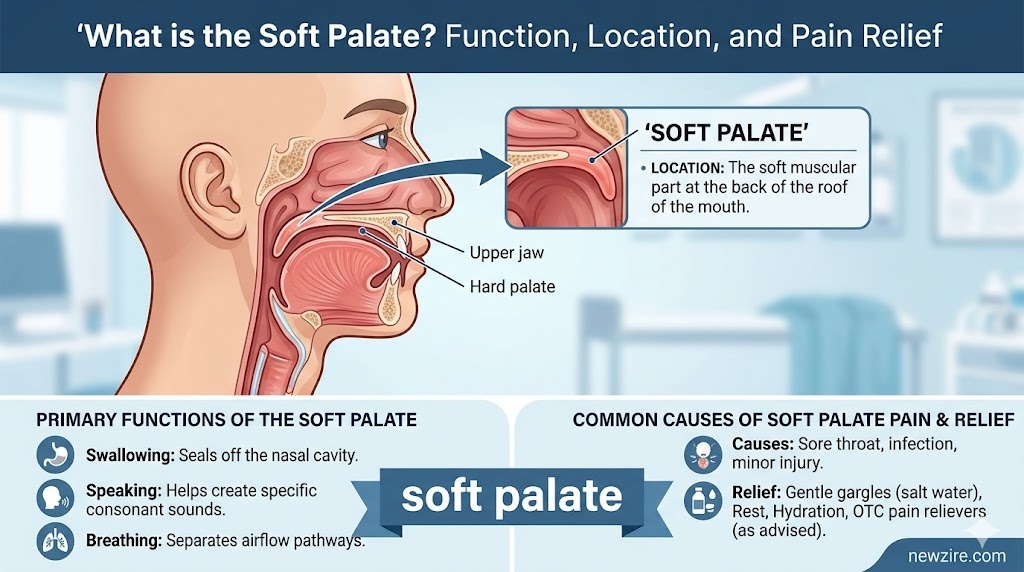
You can find this tissue right at the back of the roof of your mouth. If you slide your tongue backward along the roof, you will feel a change. The front area feels firm because it has bone underneath it. As your tongue moves further back, the roof becomes smooth and fleshy.
This soft area sits right before your throat begins. It forms a flexible curtain between your mouth and your nasal passages. At the very edge of this curtain hangs a small piece of flesh. This hanging tissue is called the uvula. The uvula moves up and down when you swallow your food.
Exploring the Primary Soft Palate Function
The main soft palate function is to act as a shield for your nose. When you swallow food or liquids, this tissue moves upward automatically. This movement blocks the path to your nose. It makes sure that your water or dinner goes down into your stomach instead of up your nose.
This tissue also plays a massive role in how you speak. It helps you make specific sounds like “g” and “k” by touching the back of your tongue. Without this flexible tissue, your voice would sound very nasal. Air would constantly escape through your nose while you try to talk to your friends.
The Big Differences: Hard Palate vs Soft Palate
When comparing the hard palate vs soft palate, structure is the main difference. The hard palate is located at the front of your mouth. It is made of solid bone covered by a thick layer of pink membranes. This bony wall provides a strong surface for your tongue to press against while chewing.
In contrast, the soft palate vs hard palate comparison shows that the back area contains no bone at all. Instead, it is made of strong muscles and connective tissues. This lack of bone allows the area to bend, lift, and stretch. This flexibility is necessary for normal breathing and swallowing throughout the day.
A Closer Look at the Hard vs Soft Palate
To better understand the hard vs soft palate, think of them like a house. The front part is like a sturdy concrete floor that can handle lots of pressure. It holds your upper teeth in place and keeps the mouth structure firm. It helps crush food into smaller pieces.
The back part acts more like a movable velvet curtain. It changes shape based on what your body needs to do. When you breathe quietly through your nose, the curtain hangs down. When you take a bite of food, the curtain lifts up to protect your airways from accidental spills.
What Causes Sudden Soft Palate Pain?
Feeling soft palate pain can make eating your favorite foods very difficult. One of the most common causes is a simple thermal burn from hot drinks. Because the tissue is highly sensitive, hot cheese or boiling soup can easily blister the skin. This leads to soreness that lasts for a few days.
Other times, irritation comes from dry air or common seasonal allergies. Snoring loudly at night can also cause the tissue to swell and feel bruised by the morning. If you wake up with a scratchy throat, your breathing habits at night might be the main reason for your discomfort.
Swollen Tissue and Common Oral Infections
Infections are another major cause of soreness in the back of the mouth. A viral infection like the common cold or flu can cause severe inflammation. Bacterial infections, such as strep throat, also make this tissue look bright red and swollen. You might even notice tiny white spots forming on the surface.
Canker sores can also grow on this flexible tissue. These small, painful ulcers make it hurt to talk or swallow. While they are annoying, standard canker sores are not contagious. They usually heal up on their own within one to two weeks without medical treatment.
How Dehydration Affects the Roof of Your Mouth
Your mouth needs a lot of moisture to stay healthy and clean. When you do not drink enough water, your tissues can dry out quickly. This lack of moisture makes the soft tissues highly sensitive to friction. It can lead to a burning sensation when you chew dry foods like crackers.
Drinking alcohol or using tobacco products can dry out these tissues even further. To keep your mouth feeling comfortable, try to sip water throughout the day. Staying hydrated protects the delicate lining of your mouth from cracking and becoming sore.
Comparing the Palate Zones At a Glance
It can be helpful to see exactly how these two areas compare side by side. They have very different jobs, but they must work as a team. Here is a detailed breakdown of how these two zones function inside your mouth.
| Feature | Hard Palate | Soft Palate |
| Location | Front roof of the mouth | Back roof of the mouth |
| Main Material | Hard bone and tissue | Flexible muscle and fibers |
| Primary Job | Crushing food during chewing | Blocking the nasal path during swallowing |
| Movement | Stays completely still | Moves up and down constantly |
| Key Sounds | Helps make “t”, “d”, and “s” | Helps make “g” and “k” sounds |
Simple Remedies to Soothe a Sore Mouth
If you are dealing with minor irritation, you can try a few easy remedies at home. Rinsing your mouth with warm salt water is an excellent way to reduce swelling. The salt helps clean the area gently and washes away harmful bacteria. Do this two or three times a day for relief.
Eating soft, cool foods can also help your mouth heal faster. Yogurt, ice cream, and cool smoothies feel great on a burned or irritated palate. Avoid eating crunchy chips, spicy peppers, or sour citrus fruits until the soreness is completely gone. These foods can irritate the raw skin.
When Should You See a Doctor?
Most minor mouth injuries heal quickly on their own. However, you should pay close attention to changes that do not go away. If your pain lasts for more than two weeks, it is time to visit a doctor or dentist. They can check the area to make sure nothing serious is going on.
Warning Signs: Seek medical care immediately if you have trouble breathing, cannot swallow water, or develop a high fever.
Conclusion
Your soft palate is a small but mighty part of your digestive and respiratory systems. From preventing food from entering your nose to helping you speak clearly, it works hard behind the scenes. Taking care of your oral health by staying hydrated and avoiding extremely hot foods will keep this tissue happy. If you ever notice unusual spots or long-lasting pain, always talk to a healthcare professional for advice.
Frequently Asked Questions
Where can I find my soft palate?
It is located at the very back of the roof of your mouth. It starts right where the hard, bony part of your roof ends and extends toward your throat.
Can snoring cause soreness in this area?
Yes, heavy snoring causes the tissues in your mouth to vibrate loudly all night. This constant vibration can leave the area feeling swollen, dry, and sore when you wake up.
How long does a burned palate take to heal?
Minor burns from hot food usually heal within three to seven days. The cells inside your mouth regenerate quickly, but you should avoid spicy or sharp foods while it heals.
What is the difference between the hard and soft palate?
The hard palate is bony and sits at the front of the mouth to help chew food. The soft palate is made of muscle, sits at the back, and moves to block your nasal passage when swallowing.
Why does it hurt when I swallow?
Pain during swallowing often means the tissue is inflamed from a cold, flu, or strep throat. It can also be caused by a canker sore or a physical burn.
Can allergies cause irritation in the roof of the mouth?
Yes, seasonal allergies can cause post-nasal drip, which is mucus dripping down the back of your throat. This constant dripping can irritate the delicate tissues and cause mild itchiness or pain.