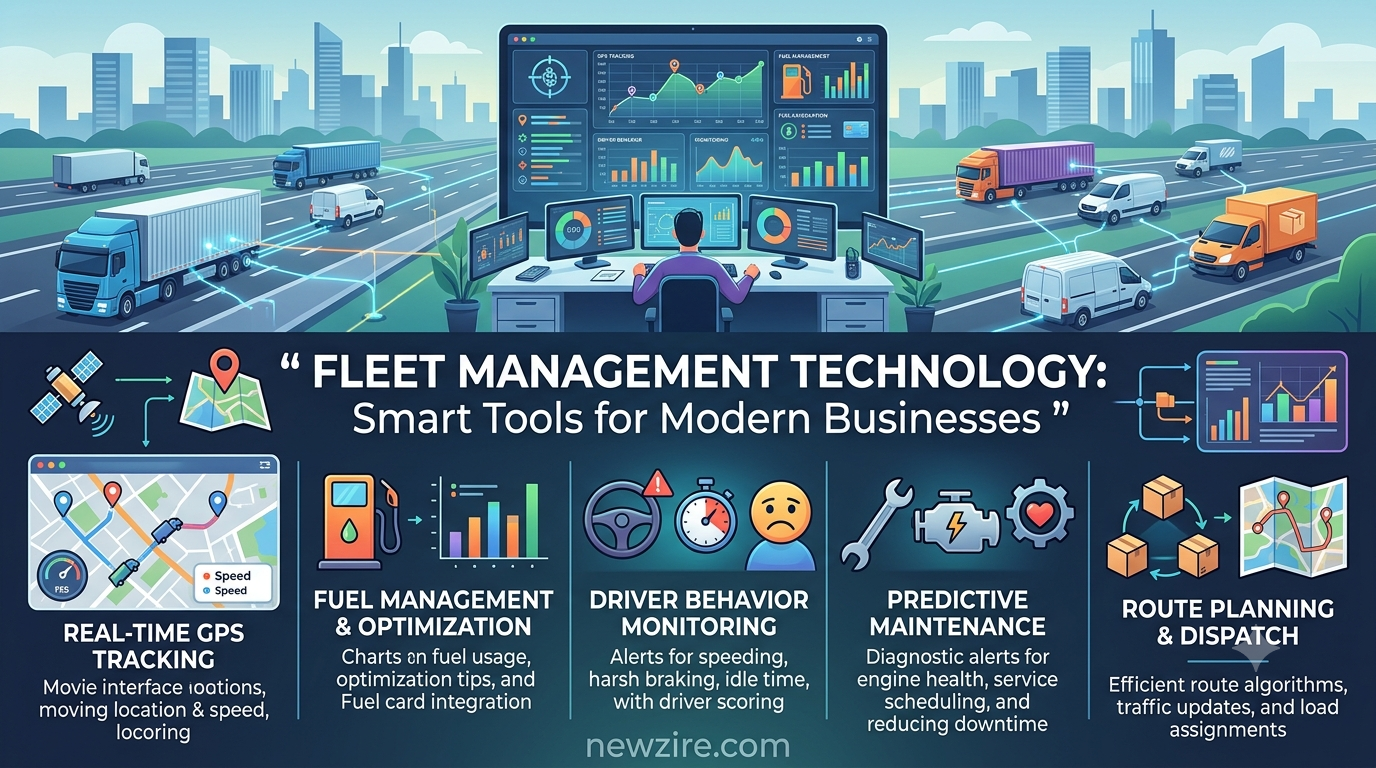
Fleet management technology is changing how businesses control vehicles, drivers, and deliveries. It helps companies track movement, save fuel, and improve safety. In today’s fast world, every second matters. This system gives real-time updates and smart data for better decisions. Many transport companies now depend on it to stay competitive and efficient.
At its core, fleet management technology connects vehicles with digital tools like GPS, sensors, and software. It allows managers to see where every vehicle is and how it is performing. This reduces delays and improves customer service. It also helps cut costs by reducing fuel waste and unnecessary travel. Businesses of all sizes are using this system today.
This guide will explain how it works, its benefits, features, and future trends in a very simple way.
What is Fleet Management Technology?
Fleet management technology is a digital system used to manage vehicles in one place. It tracks cars, trucks, and vans using smart software. Managers can see live locations, driver behavior, and vehicle health easily.
This system also stores data like speed, routes, and fuel usage. It helps companies make better decisions every day. With fleet management technology, businesses can reduce mistakes and improve delivery speed.
It is widely used in logistics, transport, delivery services, and even public services. The goal is simple: improve performance and reduce cost.
How Fleet Management Technology Works
Fleet systems work using GPS, sensors, and cloud software. Each vehicle has a tracking device installed. This device sends data to a central system.
Managers log in to see all vehicles on a map. They can track speed, stops, and routes in real time. Alerts are also sent if something unusual happens.
fleet management technology collects all this data and turns it into useful reports. These reports help companies improve driving habits and reduce risks.
Key Features of Fleet Systems
Modern fleet systems come with many smart features. These include GPS tracking, route planning, and driver monitoring. They also track fuel usage and vehicle health.
Some systems even send alerts for maintenance needs. This prevents breakdowns and delays. Another key feature is mobile access, so managers can check data anywhere.
fleet management technology also supports automation. It reduces manual work and increases accuracy in daily operations.
Benefits for Businesses
Fleet systems offer many benefits for companies. First, they reduce fuel costs by improving routes. Second, they improve delivery speed and accuracy.
They also increase safety by monitoring driver behavior. Managers can quickly correct unsafe driving habits.
With fleet management technology, businesses save time and money. It also improves customer satisfaction by ensuring on-time deliveries
Role of GPS Tracking in Fleet Management
GPS tracking is the heart of fleet systems. It shows real-time location of every vehicle. This helps managers plan better routes and avoid traffic.
It also prevents theft by giving exact location data. Drivers can be guided to take the fastest route.
fleet management technology uses GPS data to improve efficiency and reduce delays in transportation.
Fuel Management and Cost Control
Fuel is one of the biggest costs in transport. Fleet systems help reduce fuel waste by monitoring usage.
They detect harsh driving like speeding or sudden braking. These habits increase fuel consumption.
With fleet management technology, companies can plan fuel-efficient routes and save money daily. Small savings lead to big profits over time.
Safety and Driver Behavior Improvement
Safety is a top priority in transport. Fleet systems monitor driver actions like speed, braking, and rest time.
If unsafe behavior is detected, alerts are sent to managers. This helps reduce accidents.
fleet management technology encourages responsible driving by tracking performance and providing feedback.
Cost Reduction and Business Efficiency
Fleet systems reduce overall business costs. They cut fuel waste, repair costs, and downtime.
They also improve scheduling and reduce missed deliveries. This increases productivity and profit.
Companies using fleet management technology often report higher efficiency and lower operational costs within months.
AI and Future Trends in Fleet Systems
Artificial intelligence is making fleet systems smarter. AI predicts maintenance needs before breakdowns happen.
It also suggests better routes based on traffic patterns. This saves time and fuel.
In the future, fleet management technology will become fully automated with smart vehicles and self-learning systems.
Choosing the Right Fleet Solution
Choosing the right system depends on business size and needs. Small companies may need basic tracking. Large companies need advanced analytics and automation.
Always check features like GPS accuracy, reporting tools, and support services.
A good system should be easy to use and scalable for future growth.
Real-World Example and Industry Insight
Many global transport companies now use digital fleet systems. They have improved delivery speed and reduced costs significantly.
| Company Type | Benefit Achieved | Result |
| Logistics Firms | Better tracking | Faster delivery |
| Delivery Services | Route optimization | Lower fuel cost |
| Transport Companies | Safety monitoring | Fewer accidents |
This shows how fleet management technology is shaping modern industries. It is no longer optional but essential for growth.
Conclusion
Fleet systems are transforming how businesses operate every day. They improve safety, reduce costs, and increase efficiency. From small delivery services to large transport companies, everyone benefits.
With smart tools and real-time data, fleet management technology helps businesses stay ahead in a competitive market. It is a powerful solution for the future of transportation.
If companies invest today, they will see long-term growth and better performance tomorrow.
FAQs
1. What is fleet management technology used for?
It is used to track, manage, and improve vehicle operations. It helps businesses save time and money.
2. Is fleet management technology expensive?
Costs depend on features and company size. Many affordable options are available for small businesses.
3. How does it improve safety?
It monitors driver behavior and sends alerts for unsafe actions like speeding.
4. Can small businesses use it?
Yes, even small delivery businesses can benefit from simple systems.
5. Does it really reduce fuel costs?
Yes, it improves routes and driving habits, which lowers fuel usage.
6. What is the future of fleet systems?
The future includes AI automation, smart vehicles, and real-time predictive systems using fleet management technology.