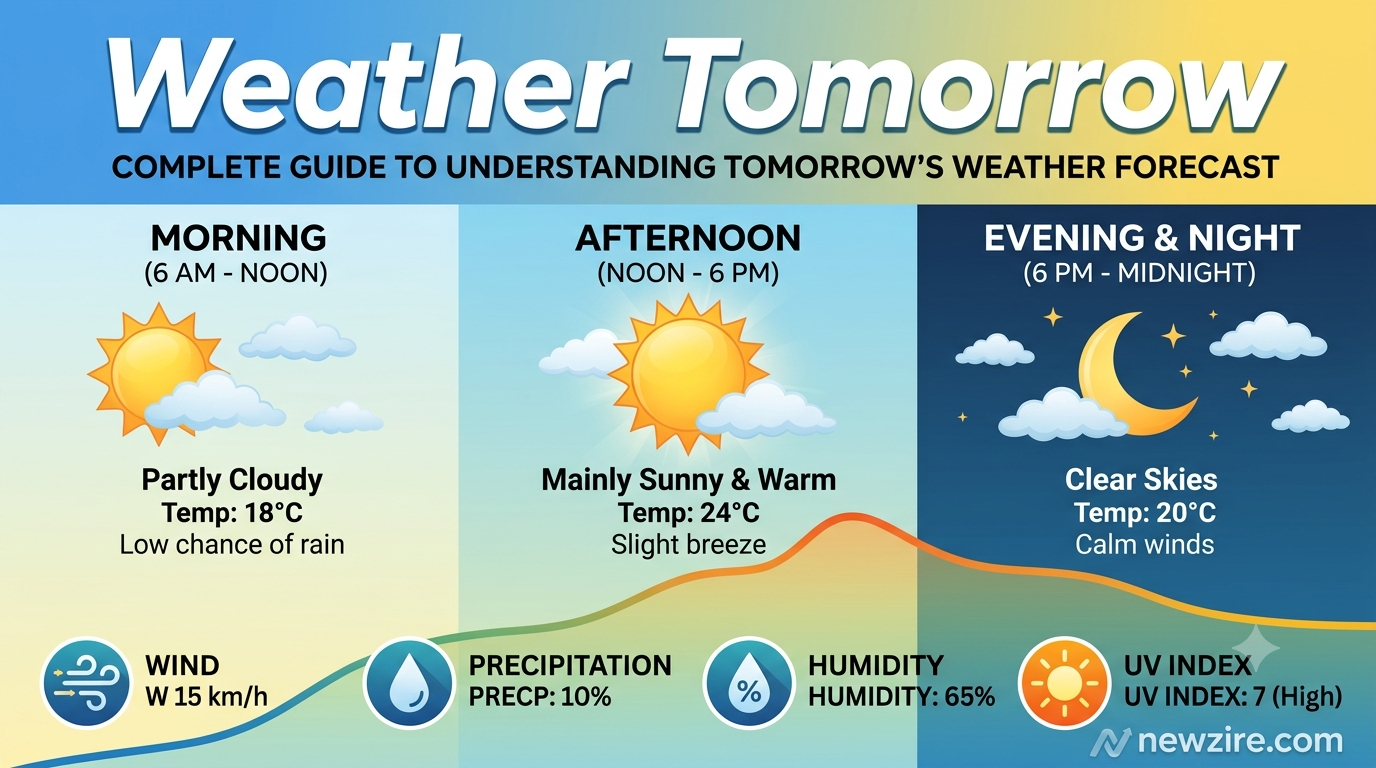
Have you ever wondered what the weather tomorrow will be like before leaving home? Checking tomorrow’s forecast has become part of daily life for millions of people. Whether you are going to school, work, traveling, or spending time outdoors, knowing the expected weather helps you make better choices. It can help you decide what to wear, whether to carry an umbrella, or if it is safe to plan outdoor activities. A simple weather check can save time, improve safety, and make your day more comfortable.
Modern weather forecasts are much more accurate than they were years ago. Scientists use satellites, weather stations, computer models, and radar systems to study changes in the atmosphere. While forecasts are never perfect, they often provide a reliable picture of what tomorrow may bring. In this guide, you will learn how weather forecasts work, why they matter, and how to use them wisely in everyday life.
What Does Weather Tomorrow Mean
The phrase weather tomorrow refers to the forecast for the next day. It usually includes expected temperatures, rain chances, wind speed, humidity, cloud cover, sunrise and sunset times, and other important weather conditions.
People check tomorrow’s weather for many reasons. Parents plan school activities, travelers prepare for trips, farmers protect crops, and businesses organize outdoor work. Even simple daily decisions become easier when you know what weather is coming.
Weather forecasts are based on scientific observations and computer calculations. Experts analyze thousands of pieces of information before sharing the forecast. Although unexpected changes can happen, tomorrow’s forecast is generally one of the most accurate predictions available.
Why Checking Weather Tomorrow Is Important
Checking weather tomorrow helps you stay prepared for the day ahead. A few seconds spent reviewing the forecast can prevent many problems later.
For example, if heavy rain is expected, you can leave home with waterproof shoes and an umbrella. If temperatures will be very hot, you can drink extra water and avoid long periods outside. During winter, knowing about snow or ice can help drivers travel more safely.
Planning ahead also reduces stress. Instead of guessing what conditions might be like, you can confidently organize work, school, sports, or family events.
How Meteorologists Predict Tomorrow’s Weather
Weather experts collect information from many different sources every hour. Satellites monitor cloud movements from space. Radar systems detect rainfall and storms. Weather balloons measure conditions high in the atmosphere.
Powerful computers analyze this information using mathematical models. These models estimate how weather systems will move over the next several hours and days. Meteorologists then review these predictions before publishing a forecast.
Human experience also matters. Experts understand local weather patterns and can improve computer predictions using their knowledge.
What Information Is Included in a Weather Forecast?
A complete forecast contains much more than temperature. Most forecasts include:
- High and low temperatures
- Chance of rain
- Wind speed and direction
- Humidity levels
- Cloud cover
- UV Index
- Air quality
- Sunrise and sunset times
- Visibility
- Storm warnings
Each part helps people prepare for different activities throughout the day.
Factors That Can Change Tomorrow’s Weather
Many natural forces influence weather conditions. Air pressure changes can create storms or clear skies. Ocean temperatures affect moisture levels. Wind carries weather systems from one place to another.
Mountains, rivers, forests, and cities also affect local weather. A coastal town may experience cooler temperatures than an inland city, even when they are close together.
Because so many factors interact, forecasts may change slightly as new information becomes available.
How Accurate Is Tomorrow’s Weather Forecast?
Most one-day forecasts are very reliable. Forecast accuracy has improved greatly because of better technology and more advanced computer models.
However, weather is always changing. Small shifts in wind or atmospheric pressure can alter the forecast. This is why experts regularly update weather reports throughout the day.
Checking the latest forecast before leaving home gives you the best chance of staying prepared.
How to Prepare for Different Weather Conditions
Preparation depends on the expected forecast.
On rainy days, carry waterproof clothing and plan extra travel time. During hot weather, wear light clothes and stay hydrated. Cold weather requires warm layers and proper footwear. Strong winds may require securing outdoor furniture or avoiding certain activities.
Simple preparation helps keep you safe and comfortable regardless of changing weather conditions.
Best Ways to Check Weather Tomorrow
Today, finding weather tomorrow is easier than ever.
Many people use weather apps on smartphones because they update frequently. Television weather reports remain popular, especially during severe weather events. Websites also provide detailed hourly forecasts, radar maps, and weather alerts.
Some smart home devices even provide weather updates through voice assistants, making it convenient to check forecasts while getting ready for the day.
Common Weather Terms You Should Know
Weather forecasts often use terms that may seem confusing. Learning a few basic words makes forecasts easier to understand.
Humidity measures moisture in the air. Precipitation includes rain, snow, sleet, or hail. Wind chill describes how cold the air feels because of wind. Heat index explains how hot temperatures feel when humidity is high.
Knowing these terms helps you better understand tomorrow’s forecast.
How Climate Differs From Weather
People often confuse climate with weather, but they are different.
Weather describes short-term conditions like today’s sunshine or tomorrow’s rain. Climate refers to average weather patterns over many years.
For example, one rainy day does not change a region’s climate. Climate looks at long-term trends rather than daily changes.
Understanding this difference helps people better interpret weather forecasts.
Tips for Making Better Daily Plans
Checking weather tomorrow should become part of your daily routine. Look at the forecast before going to bed or early in the morning.
If rain is expected, adjust outdoor plans. If temperatures will be high, schedule physical activities during cooler hours. Travelers should also check weather conditions along their entire route.
Flexible planning allows you to enjoy your day regardless of changing weather.
How Technology Has Improved Weather Forecasting
Technology has transformed weather forecasting over the last few decades. Modern satellites capture detailed images every few minutes. Supercomputers process billions of calculations quickly. Artificial intelligence helps identify weather patterns faster than ever before.
These improvements allow meteorologists to issue earlier warnings for severe weather events. Better forecasts help communities prepare for storms, floods, heat waves, and other dangerous conditions.
As technology continues to improve, tomorrow’s forecasts will likely become even more accurate.
Conclusion
Knowing the weather tomorrow helps you prepare for everyday life with confidence. From choosing the right clothes to planning travel and outdoor activities, tomorrow’s forecast provides valuable information that saves time and improves safety. While forecasts are never perfect, modern science has made them highly reliable for daily planning.
Make checking tomorrow’s weather part of your routine. A quick look at the forecast can help you avoid surprises, stay comfortable, and make smarter decisions every day.
Frequently Asked Questions (FAQs)
1. How accurate is the weather tomorrow forecast?
Tomorrow’s forecast is generally very accurate because it uses the latest weather observations and advanced computer models.
2. Why does tomorrow’s weather sometimes change?
Weather systems constantly move and new data becomes available, causing forecasts to be updated throughout the day.
3. What should I check besides temperature?
Look at rain chances, wind speed, humidity, UV Index, and severe weather alerts for better planning.
4. How often should I check weather tomorrow?
Checking once in the evening and again before leaving home gives you the most current forecast.
5. Can weather forecasts predict storms?
Yes. Modern forecasting systems can often predict storms well in advance, though exact timing and intensity may change.
6. Why is checking weather tomorrow important?
It helps you prepare for travel, work, school, outdoor activities, and unexpected weather conditions while improving comfort and safety.